
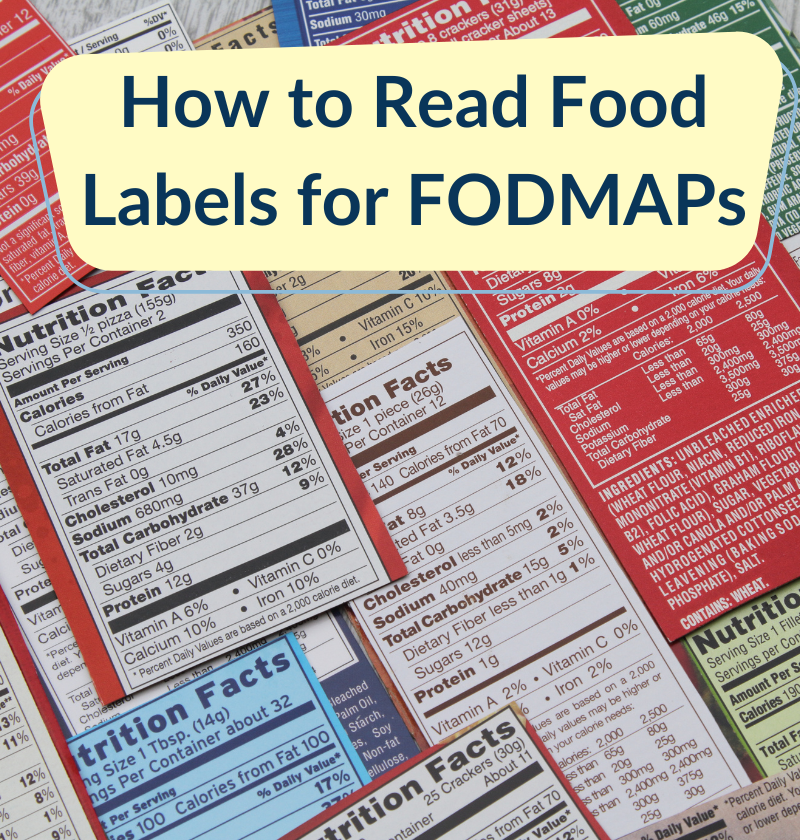
One of the biggest challenges when following a Low FODMAP diet is figuring out which packaged foods are safe to eat. High FODMAP ingredients can be hidden under complex names, making it tricky to identify them at a glance. In this guide, we’ll walk you through how to read food labels for FODMAPs, including what to look for, what to avoid, and some practical tips to make shopping easier.
Why Reading Food Labels Matters on a Low FODMAP Diet?
Processed and packaged foods often contain hidden high FODMAP ingredients that can trigger digestive symptoms. Learning how to read food labels helps you:
- Avoid accidental triggers – Many high FODMAP ingredients are disguised under different names.
- Stay confident while shopping – Knowing what to look for makes shopping quicker and less stressful.
- Expand your meal options – Finding safe packaged foods makes meal planning more convenient.

Key Ingredients to Watch For:
Here are some common high FODMAP ingredients that often sneak into packaged foods:
- High FODMAP Sugars:
- Fructose
- High fructose corn syrup
- Honey
- Agave nectar
- Sugar Alcohols (Polyols):
- Sorbitol (E420)
- Mannitol (E421)
- Maltitol (E965)
- Xylitol (E967)
- Dairy-Based Ingredients (Lactose):
- Milk
- Whey
- Cream
- Yogurt
- Wheat-Based Ingredients (Fructans):
- Wheat flour
- Rye
- Barley
- Spelt
- Vegetable and Fruit-Based Ingredients:
- Onion powder
- Garlic powder
- Apple juice concentrate
- Pear puree
How to Read Labels Step-by-Step:

- Start with the Ingredients List
- Ingredients are listed in order of quantity (highest to lowest).
- If a high FODMAP ingredient appears in the first few items, it’s likely present in large amounts.
- Watch for “Hidden” Names
- High FODMAP ingredients are often listed under alternative names.
- For example, inulin (a fructan) may be listed as “chicory root extract.”
- Check the Nutrition Panel
- Look for sugars and fiber content.
- High amounts of sugar alcohols or added fructose may indicate a high FODMAP product.
- Beware of “Natural” and “Healthy” Claims
- “Natural” doesn’t mean Low FODMAP.
- Products labeled as “gluten-free” can still be high FODMAP due to other ingredients like onion or garlic.
- Use the Monash FODMAP App
- The Monash app allows you to scan barcodes and check whether a product is Low or High FODMAP.
- It also provides portion size recommendations.
Common Traps to Avoid.
- “Low Sugar” and “Sugar-Free” Claims: These often mean sugar alcohols like sorbitol or xylitol have been added.
- Plant-Based or Vegan Alternatives: Many dairy-free products are made with high FODMAP ingredients like cashew or almond milk.
- Processed Meat and Snack Foods: Ingredients like onion powder, garlic powder, and lactose often appear in flavourings.
Low FODMAP-Friendly Ingredients to Look For
✅ Glucose, cane sugar, and maple syrup (in small amounts)
✅ Lactose-free dairy products (e.g., almond milk, coconut yogurt)
✅ Gluten-free grains (e.g., rice, quinoa, corn)
✅ Herbs and spices (except garlic and onion)
✅ Garlic-infused olive oil (without garlic pieces)
Tips for Success
- Keep a list of safe and unsafe ingredients – Carry a note on your phone or print out a list.
- Stick to whole, unprocessed foods – When possible, cook from scratch to avoid hidden FODMAPs.
- Don’t be afraid to contact manufacturers – If you’re unsure about an ingredient, reach out to the company.
- Focus on progress, not perfection – You won’t get it right every time, and that’s okay!
Learning how to read food labels for FODMAPs takes practice, but it’s a skill that will make managing your diet much easier. With a little patience and preparation, you’ll be able to shop with confidence and avoid uncomfortable symptoms.
Need help with meal ideas or shopping lists? Check out our [Low FODMAP meal plans] and [beginner-friendly recipes] to make your Low FODMAP journey easier!
Please note: I am not a licensed nutritionist or dietitian. The recipes and tips provided on this blog are based on my personal experience of home cooking low FODMAP meals for over five years. This content is intended for informational and inspirational purposes only and should not replace professional dietary advice. Always consult with a qualified healthcare provider before making any changes to your diet, especially if you have specific health concerns.